






Beyond the Warm Homes Plan: A National Retrofit Programme for people and planet
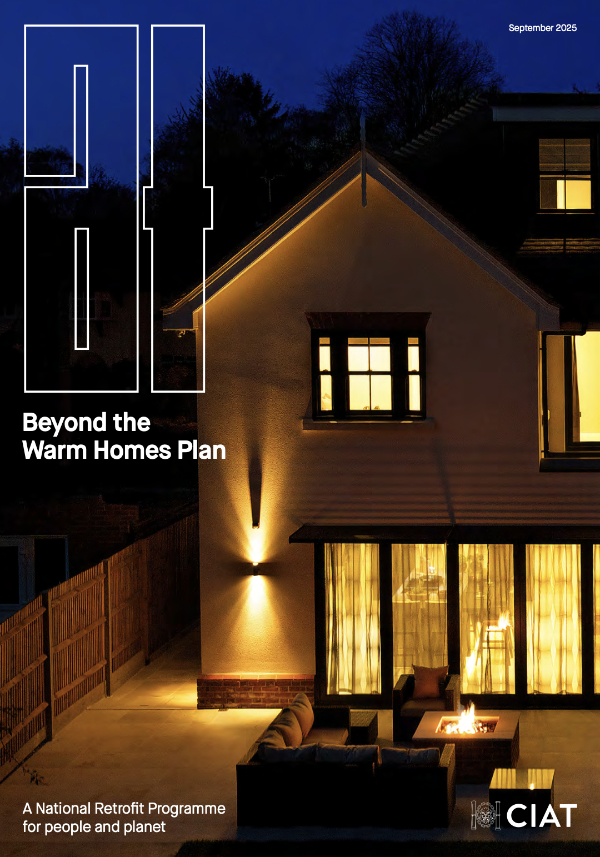
[edit] CIAT launches plan to future-proof UK homes
CIAT has launched a new report, Beyond the Warm Homes Plan: A National Retrofit Programme for people and planet, which sets out a plan to deliver holistic, design-led retrofits to ensure that homes are healthy, sustainable and resilient to a changing climate.
Across 25 recommendations, the paper lays out a comprehensive, deliverable plan for Government, building on the Warm Homes Plan, utilising grants and low interest loans to expand access to retrofit measures. Recommendations from the Report include combining the numerous separate funding pots and support schemes for home energy efficiency improvements into a single, streamlined Programme, removing VAT on retrofit measures, providing “home instruction manuals” to support households to get the best performance from new, energy efficient systems, and implementing a lower rate of stamp duty for the most energy efficient homes.
President, Eddie Weir PCIAT, said:
"Everyone deserves a healthy, safe home. But too many homes in this country are poor quality, excessively cold in winter and hot in summer. This poor housing contributes to ill health, costing the NHS around £2.5 billion per year. Housing is also a key contributor to climate change, with residential building responsible for 12% of UK greenhouse gas emissions in 2023.
By tackling these challenges in a coordinated way, government has the opportunity to deliver profound benefits to households, boost productivity, and provide high-quality, well-paid jobs right across the country.
And, by abolishing VAT on retrofit measures, and lowering Stamp Duty for the best performing homes, government can create a commercial market for healthy, sustainable homes over the long term. "
Chair of the CIAT Climate Society, Chris Halligan MCIAT, said:
"The UK Climate Change Committee has made it clear that we need to rapidly decarbonise our homes over the next two decades, in order to achieve Net Zero by 2050, as part of global efforts to limit warming. But more than that, our homes need to be resilient to the climatic changes we are already living through.
The good news is, we already have the technology to deliver such a transformation in our homes. Technologies such as air source heat pumps are now tried and tested, including in cold countries such as Norway.
This plan provides a blueprint for Government to accelerate the roll-out of these measures, so that everyone can benefit from them."

Below is a brief precis of the 25 recommendations, a summary of the key recommendations can be found here and the full report can be read here.
- Broaden the Warm Homes Plan into a National Retrofit Programme addressing emissions, resilience, health, costs, and community design.
- Apply a “no detriment” rule so interventions don’t worsen outcomes on any key objective.
- Assign a single government authority and minister to lead and be accountable for the programme.
- Partner with local government, housing providers, and charities to deliver long-term, funded support.
- Merge all housing support into one unified programme with a clear brand and single digital access point.
- Automatically identify and contact eligible households instead of requiring them to apply.
- Allow a wide range of professionals and organisations to refer households for support.
- Pool private and government funding into a central National Retrofit Programme pot managed by the National Housing Bank.
- Set broad eligibility criteria to prioritise households most in need of grant support.
- Provide low-interest micro-mortgages to households not eligible for grants, covering full retrofit costs.
- Offer low-interest loans to social landlords and private landlords to meet energy efficiency standards.
- Work with local partners to deliver large-scale community retrofit projects, especially for private renters and owners.
- Require independent, qualified design professionals to assess homes and recommend retrofit measures targeting Band C and zero emissions.
- Allow designers to propose higher-standard upgrades where benefits outweigh costs, with optional performance tiers for loan-funded projects.
- Conduct building performance evaluations after retrofits to verify outcomes and build public confidence.
- Provide households with a “home instruction manual” to optimise the use of their upgraded homes.
- Extend zero VAT to all energy-saving measures regardless of buyer, installer, or project scope.
- Encourage design and construction professionals to promote retrofit measures alongside wider home improvements.
- Apply reduced VAT rates to renovation works and reclaimed materials to support retrofit and circular material use.
- Offer reduced stamp duty for highly energy-efficient homes to incentivise upgrades and create a stronger market.
- Launch a national campaign to promote careers in sustainable design and construction.
- Improve workforce data collection to identify skills gaps and evaluate policy effectiveness.
- Ensure equal access for competent professionals to participate in the programme through fair procurement.
- Help households identify competent retrofit professionals via the single digital access point.
- Include effective dispute resolution pathways so households can resolve retrofit issues at no extra cost.
CIAT will be sharing this report with Government and parliamentarians, as part of our ongoing advocacy work. If you would like to support this work, please contact externalaffairs@ciat.global
This article appears on the CIAT news and blog site as "CIAT launches plan to future-proof UK homes" dated 18 September, 2025, with the precis of recommendations added by editor.
--CIAT
[edit] Related articles on Designing Buildings
- Accredited energy assessor.
- Are Energy Performance Certificates accurate?
- Building performance.
- Building performance metrics.
- Certificates in the construction industry.
- Display energy certificate.
- Emission rates.
- Energy certificates for buildings.
- Home information pack HIP.
- How are EPCs produced?
- Minimum energy efficiency standard (MEES).
- National Calculation Method.
- Passivhaus vs SAP.
- Performance contracting.
- Performance gap.
- Simplified Building Energy Model.
- The Home Energy Model and Future Homes Standard assessment wrapper.
- The sustainability of construction works.
- The Warm Homes Plan and existing policies to help with energy bills
- Warm Home Discount scheme.
- Warm Homes Local Grant
- Warm Homes Plan.
- Waves of warmer homes grants for the rental sector.
- What the political party manifestos say on housebuilding and building safety.
Featured articles
Check out some of the best features and news from Designing Buildings as well as key stories from around the web.

Channel 4 broadcaster to host 125th anniversary ceremony.
Listed structures on the rail network

Heritage interests and operational requirements must be balanced.
Historic England publishes research into embodied carbon when retrofitting traditional buildings.

New Prime Minister delivers on ECA call for cut in electricity costs.

CIOB reacts to the announcement of Andy Burnham as Prime Minister.

Heritage and conservation science workforce survey - Have your say.
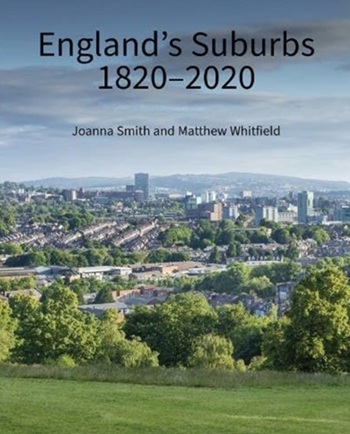
England's Suburbs 1820-2020. Book review.

New, more proportionate and targeted approach for higher-risk building assessments.

Government brings British Steel into public ownership.
UKCW Birmingham returns with bold new theme and focus.

New guidance published on competence requirements for self-certification schemes.
Construction Management, 8 July

NEETs crisis drives interest in trades, but apprenticeships barriers remain.